Basil’s Amazing Health Benefits
Besides the many basil benefits, it has a pleasant aroma and is highly appreciated as a seasoning plant.
Scientific Facts
- Scientific Name: Ocimum basilicum L.
- Other Names: Common basil, sweet basil, St. Josephwort.
- French: Basilic.
- Spanish: Albahaca.
- Environment: Native to India and Indonesia, it has grown in Europe since ancient times. Basil was spread in tropical and subtropical regions in America and worldwide.
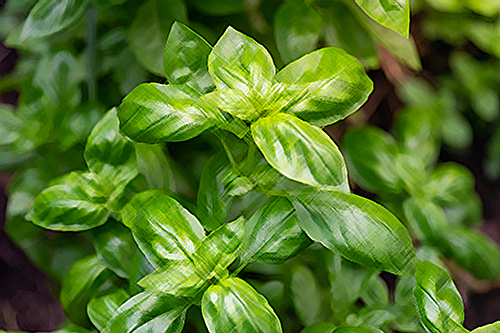
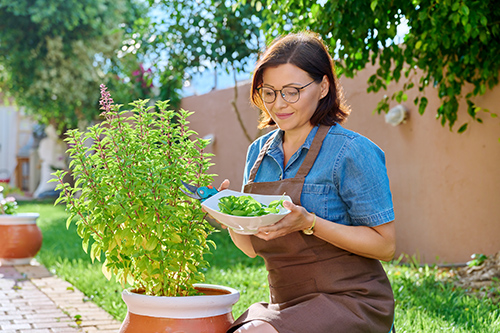
- Description: Herbaceous, vivacious plant of the Labiatae family, which grows up to 50 cm high, with lanceolate, light green leaves, and white or pink flowers growing in terminal bouquets.
- Parts of the plant used medicinally: The leaves and flowers.
Health Benefits
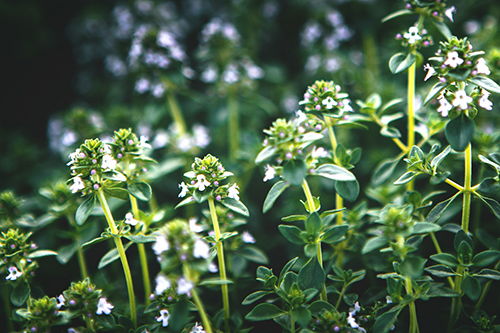
The entire plant contains an essential oil rich in estragol (like tarragon), eugenol (like the clove tree), and linalool and terpenic substances. To this essence, the plant owes the following properties:
- Antispasmodic – Basil calms nervous and digestive disorders, such as digestive spasms (stomach nervousness), aerophagia (excess of gas and burps), and nervous dyspepsia (slow digestion caused by nervous tension). It also eases migraines caused by or associated with lousy digestion.
- It invigorates the nervous and cardiovascular systems. It is recommended for asthenia, nervous exhaustion, fatigue, and arterial hypotension (low blood pressure).
- Galactogenic – Basil increases the production of milk in breastfeeding women.
- Emmenagogue – The plant eases menstruation and the pain caused by uterine spasms or congestion.
Warning
In high doses, basil essence, when internally applied, can cause narcotic effects, and externally used, it can irritate the mucous membranes.
How to use Basil
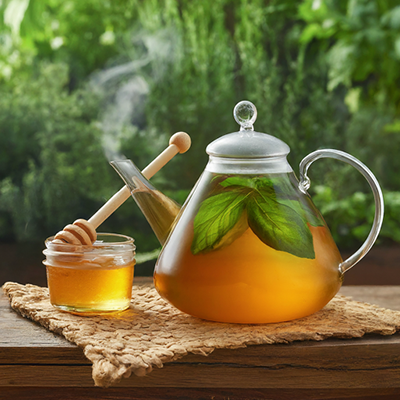
- Infusion with 20 to 30 leaves and flowers per liter of water. Drink a hot cup sweetened with honey after every meal to enhance its effect.
- Essence – The recommended dose is from 2 to 5 drops thrice daily.
- Invigorating lotion with the essence.
- Baths – Adding the essence to the bath water to take advantage of its stimulating effects.
DISCLAIMER: All content on this website is presented solely for educational and informational objectives. Do not rely on the information provided as a replacement for advice, diagnosis, or treatment from a qualified medical expert. If you are pregnant, nursing, or have any preexisting medical concerns, talk to your doctor before using any herbal or natural medicines.
REFERENCES
- George D. Pamplona-Roger, M.D. “Encyclopedia of Medicinal Plants.” George D. Pamplona-Roger, M.D. Encyclopedia of Medicinal Plants. Ed. Francesc X. Gelabert. Vols. 1 San Fernando de Henares: Editorial Safeliz, 2000. 368. Print.
- https://www.healthline.com/nutrition/basil
- https://www.webmd.com/diet/health-benefits-basil
Last update on 2025-12-20 / Affiliate links / Images from Amazon Product Advertising API