Harness the Strength of Butcher’s Broom
Contents
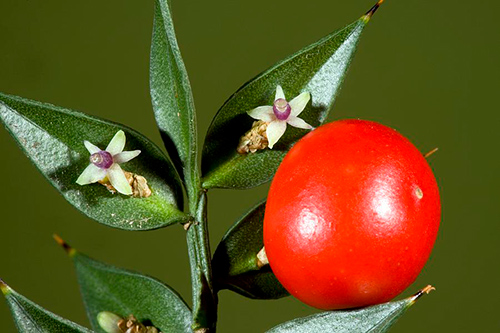
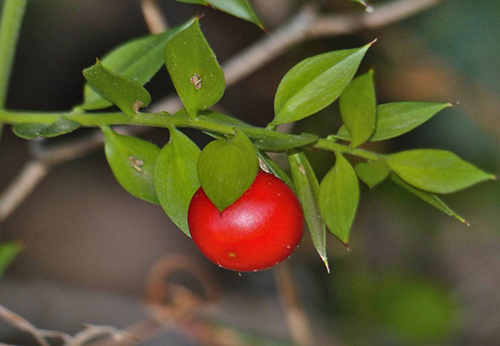
The ancient Greeks already knew about the butcher’s broom’s magical uses. This plant’s true leaves are imperceptible scales that grow along the stem. What seems to be the leaves are indeed pseudoleaves, botanically known as phylloclades. From them, flowers and fruits grow.
Butcher’s Broom Scientific Facts
- Scientific Name – Ruscus aculeatus L.
- Other Names – Kneeholly.
- French – Fragon.
- Spanish – Rusco.
- Environment – Limy soils and forests, mainly beech and holm oak forests, in Central and South Europe.
- Description—This is an evergreen shrub of the Liliaceae family. Its upright stem grows from 1 to 1 and a half meters high, and its fruit is a red berry.
- Parts of the plant used medicinally: The rhizome and the root.
Butcher’s Broom Magical Uses
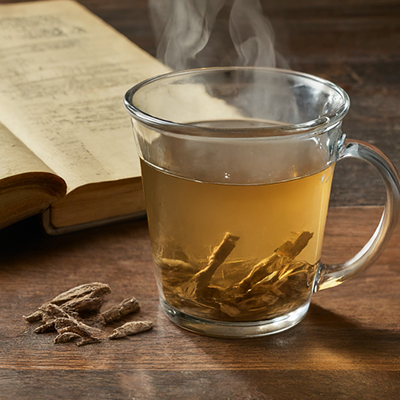
The butcher’s broom’s root and rhizome contain steroid saponins with anti-inflammatory and vasoconstrictive actions and rhutine as a protective measure for the capillary vessels (vitamin P effect). Butcher’s broom is probably the vegetal remedy with the most potent venotonic action. Thus, it is part of many anti-hemorrhoid and anti-varicose medicines. Its uses are the following:
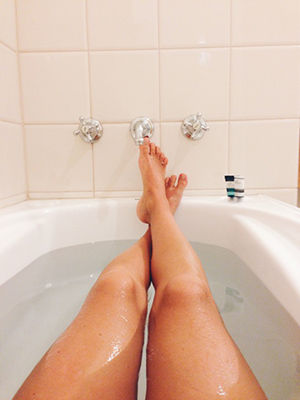
- Vein afflictions: Varicose veins, phlebitis, swollen legs, edema, hemorrhoids. Due to its active components, the plant improves blood circulation through the venous system and strengthens the wall of the capillary vessels, decreasing the exudation of liquids in the tissues. Its diuretic effects also help to reinforce this beneficial action in venous blood flow.
- Gout, arthritis, and kidney lithiasis because of its depurative action. It stimulates the elimination of uric acid and augments sweat, contributing to its blood-depurative effect.
- Superficially, it is applied to the skin to reduce cellulitis because of its stimulating effect on tissues.
How to use Butcher’s Broom
- Decoction with 40 to 60 grams of root or rhizome per liter of water, boiling for ten minutes. Drink from 4 to 6 cups daily.
- Lotions with the same decoction are employed for internal use.
DISCLAIMER: All content on this website is presented solely for educational and informational objectives. Do not rely on the information provided as a replacement for advice, diagnosis, or treatment from a qualified medical expert. If you are pregnant, nursing, or have any preexisting medical concerns, talk to your doctor before using any herbal or natural medicines.
REFERENCES
- George D. Pamplona-Roger, M.D. “Encyclopedia of Medicinal Plants.” George D. Pamplona-Roger, M.D. Encyclopedia of Medicinal Plants. Ed. Francesc X. Gelabert. Vols. 1 San Fernando de Henares: Editorial Safeliz, 2000. 259. Print.
- WebMD: https://www.webmd.com/vitamins/ai/ingredientmono-320/butchers-broom
- Healthline: https://www.healthline.com/nutrition/butchers-broom
- MedicineNet: https://www.medicinenet.com/what_is_butchers_broom_good_for/article.htm
- Memorial Sloan Kettering Cancer Center: https://www.mskcc.org/cancer-care/integrative-medicine/herbs/butcher-broom
Last update on 2025-12-20 / Affiliate links / Images from Amazon Product Advertising API