Dragon’s Blood: From Ancient Remedy to Modern Medicine?
Contents
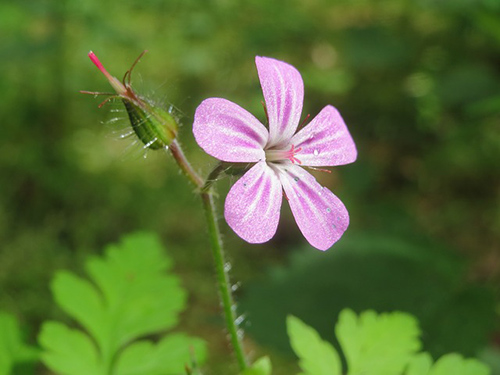
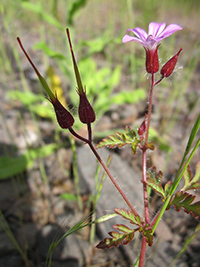
Be careful with the dragon’s blood plant, as it can be mistaken for poison hemlock. Both plants have unpleasant smells and very similar leaves. However, the dragon’s blood plant’s rose flowers and lamp-shaped dried fruits easily distinguish it.
Healing Properties and Uses
The entire plant contains a bitter substance (geranium), an essential oil that gives it its typical aroma. It also contains vital amounts of tannin, which determines its astringent action. It has astringent, diuretic, and blood-thinning properties and is a mild hypoglycemic when used internally. It is used in diarrhea and edema (liquid retention) and to complement a diabetic diet.
Today, it is mainly used externally because of its astringent and vulnerary (healing) properties in the following cases:
- Eye afflictions: eye irritation, eye drainage, conjunctivitis.
- Mouth afflictions: stomatitis, pharyngitis, gingivitis.
- Skin eruptions: herpes, shingles, eczemas, and skin inflammations.
Dragon’s Blood Plant Scientific Facts
- Other names: Herb Robert, storkbill, Wild Crane’s Bill.
- French: Herbe a Roberto.
- Spanish: Hierba de San Roberto.
- Environment: It usually grows in shady places along walls, forests, and slope edges throughout Europe and North America.
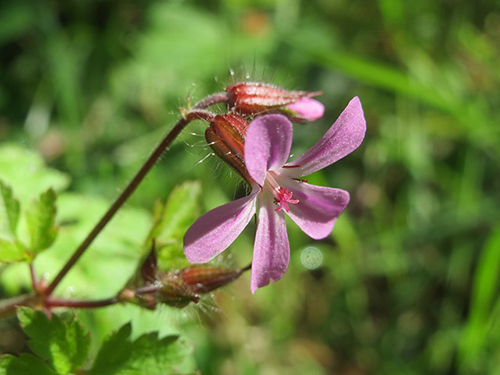
- Description: This herbaceous plant in the family Geraniaceae grows from 20 to 60 cm high. It is reddish and has a typically unpleasant smell. Its pink flowers appear in pairs.
- Parts of the plant used medicinally: The entire plant.
How to use Dragon’s Blood
- Decoction with 20 g of plant per liter of water, drinking three or four cups daily.
- Essence. The usual dose is two to four drops three times a day.
- Eye and mouth rinse with 40 g of plant decoction per liter of water.
- Compresses with the same decoction (40 g per liter).
DISCLAIMER: All content on this website is presented solely for educational and informational objectives. Do not rely on the information provided as a replacement for advice, diagnosis, or treatment from a qualified medical expert. If you are pregnant, nursing, or have any preexisting medical concerns, talk to your doctor before using any herbal or natural medicines.
REFERENCES
- George D. Pamplona-Roger, M.D. “Encyclopedia of Medicinal Plants.” George D. Pamplona-Roger, M.D. Encyclopedia of Medicinal Plants. Ed. Francesc X. Gelabert. Vols. 1 San Fernando de Henares: Editorial Safeliz, 2000. 137. Print. [dragon’s blood plant]
- Dr. Axe: https://draxe.com/nutrition/dragons-blood/
- PubMed: https://pubmed.ncbi.nlm.nih.gov/
Last update on 2025-12-20 / Affiliate links / Images from Amazon Product Advertising API