Break Free from Nervous System Disorders
Fatigue and Asthenia—Fatigue is the weakness of the body after excessive effort that is not accompanied by the necessary recovery of the affected organs or systems. Physical fatigue usually precedes a high muscular effort or a severe disease. Nervous tiredness may appear after sustained high intellectual activity or prolonged nervous tension.
Physical and nervous fatigue are closely related, one appearing as a consequence of the other and vice versa. Asthenia is the lack of loss of strength and energy, which occurs spontaneously and has no direct relation to any previous effort.
| OATS | GARLIC | WATERCRESS |
| SPIRULA | ONION | CHICKWEED |
| MOTHER OF THYME | PEPPERMINT | BASIL |
| WINTER SAVORY | ROWAN | CELERY |
| WILD STRAWBERRY | CACAO | GINSENG |
| SESAME | DAMIANA | ROSEMARY |
| ALOE | SEA BUCKTHORN | BRIER HIP |
| THYME |
Depression and nervousness – These conditions are a psychological state of melancholy and deep sadness, with or without any evident cause, and a loss of appetite, insomnia, and a propensity to inactivity. We recommend those plants that have a refreshing and balancing action on the nervous system and those that add nutritional substances such as vitamin B or lecithin. Stimulants or excitant herbs or substances must not be used to treat depression.
Nervousness and Anxiety—Nervousness is a state of nervous excitation, whether justified or not. Anxiety is an undesirable and unjustified emotion whose intensity is not proportional to its likely cause. Anxiety is different from fear. The latter implies the presence of a known actual danger. Anxiety usually manifests itself externally in a state of nervous hyperexcitation. Medicinal herbs can effectively combat nervousness and anxiety and sedate and balance the nervous system.
| OATS | ORANGE TREE | HOPS |
| PRICKLY LETTUCE | LAVENDER | BALM |
| PASSION FLOWER | LINDEN | VALERIAN |
| HAWTHORN | EVENING PRIMROSE | LEMON TREE |
| POPPY | MARJORAM | LEMON VERBENA |
| WHITE WILLOW |
Stress—The phytotherapeutic healing of stress combines two kinds of plants: invigorating herbs, which augment vital energy to confront daily stressful situations, and balancing or sedative plants, which soften the organic response to certain stressful situations. Besides the herbs mentioned above, rejuvenating plants such as winter savory, peppermint, or rosemary and balancing ones such as hawthorn are recommended.
Insomnia is chronic sleepiness due to difficulties falling asleep or continuous awakening. Unlike most chemically synthesized narcotics, the medicinal herbs we recommend can induce natural restorative sleep, with no residual drowsiness the morning after and no risk of addiction.
| ORANGE TREE | HOPS | PRICKLY LETTUCE |
| LAVENDER | BALM | PASSION FLOWER |
| LINDEN | VALERIAN | POPPY |
| WOODRUFF | SWEET FLAG | WHITE WILLOW |
Psychosomatic Diseases—These diseases are of psychological origin, at least in part, but manifest themselves as functional alterations in multiple organs. The most frequent psychosomatic disorders are gastric ulcers, colon irritation, heart attacks, and specific skin eczema. These herbs balance and modify the autonomic nervous system, the true pillar of the relationship between mind and body.
Aches and Neuralgia – Analgesic herbs act internally when taken or externally when locally applied to the skin. Their action is not usually as quick and intense as that of chemically synthesized analgesics or those made from pure substances. However, the effects of these plants are more prolonged and generally lack the most undesirable side effects.
Neuralgia is a particular type of ache characterized by intensity, intermittentity, and localization in the trajectory and course of a nerve. Phytotherapeutic treatment mainly includes preventive action.
Headaches – Headaches or cephalalgias have many sources. The most usual are:
- Congestion is an excessive accumulation of blood in the head. Thus, revulsive herbs such as mustard are used. These plants deviate blood to other areas.
- Lack of blood in the head; thus, vasodilating herbs are recommended.
- Bad digestion or gall bladder dysfunctions. Digestion and cholagogue plants are used.
Migraine – An intense headache that usually affects half the head and appears periodically, related to eye dysfunctions. During a migraine crisis, spasms of the arteries feed blood to the head; hence, antispasmodic plants are helpful. In many cases, migraine crises are caused by digestive fermentation or certain foods.
Insufficient Intellectual Performance – Herbs rich in essential fatty acids such as linolenic acid, pectin, B vitamins, and minerals such as phosphorus favor good intellectual performance. Also convenient, though not to be taken continuously, are non-excitant stimulating herbs such as ginseng or thyme. Students and all people with intense academic demands may benefit from their use.
Loss of Memory—In addition to the two herbs that have vasodilating effects on the cerebral arteries (improving blood circulation to the brain), all plants used for poor intellectual performance are also recommended.
Epilepsy – Though the herbs helpful for epilepsy do not substitute the medical treatment, they may help reduce the antiseptic product dosage and equilibrate the patient.
Organic Diseases of the Nervous System—Evening primrose oil is rich in linolenic acid, essential to neurons’ development and correct functioning. Its use is a fine complement to the specific treatment of organic nervous system diseases, such as Parkinson’s disease and multiple sclerosis.
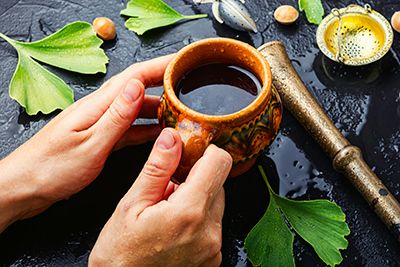
The Ginkgo is an indigenous tree of Asia bestowed with excellent medicinal properties. It is a cerebral vasodilator, which increases blood circulation in the brain; thus, neurons receive higher amounts of oxygen and nutrients.
It is suitable for people who suffer from memory loss and those who need to improve their academic performance, such as students. The infusion of its leaves is taken, though certain pharmaceutical products contain ginkgo extract, which makes this herb excellent for nervous system disorders.
DISCLAIMER: All content on this website is presented solely for educational and informational objectives. Do not rely on the information provided as a replacement for advice, diagnosis, or treatment from a qualified medical expert. If you are pregnant, nursing, or have any preexisting medical concerns, talk to your doctor before using any herbal or natural medicines.
REFERENCES
- George D. Pamplona-Roger, M.D. “Encyclopedia of Medicinal Plants.” George D. Pamplona-Roger, M.D. Encyclopedia of Medicinal Plants. Ed. Francesc X. Gelabert. Vols. 1 San Fernando de Henares: Editorial Safeliz, 2000. 140, 141, 142, 143, 144. Print. [nervous system disorders]
- Herb Pharm https://www.herb-pharm.com/blogs/herbal-education/13-nervine-herbs
- WebMD: https://www.nccih.nih.gov/health/valerian
Last update on 2025-12-20 / Affiliate links / Images from Amazon Product Advertising API